.webp)
What's the Difference Between a Public Course and a Private Course?
Public Courses: Open Enrollment, Set Schedule
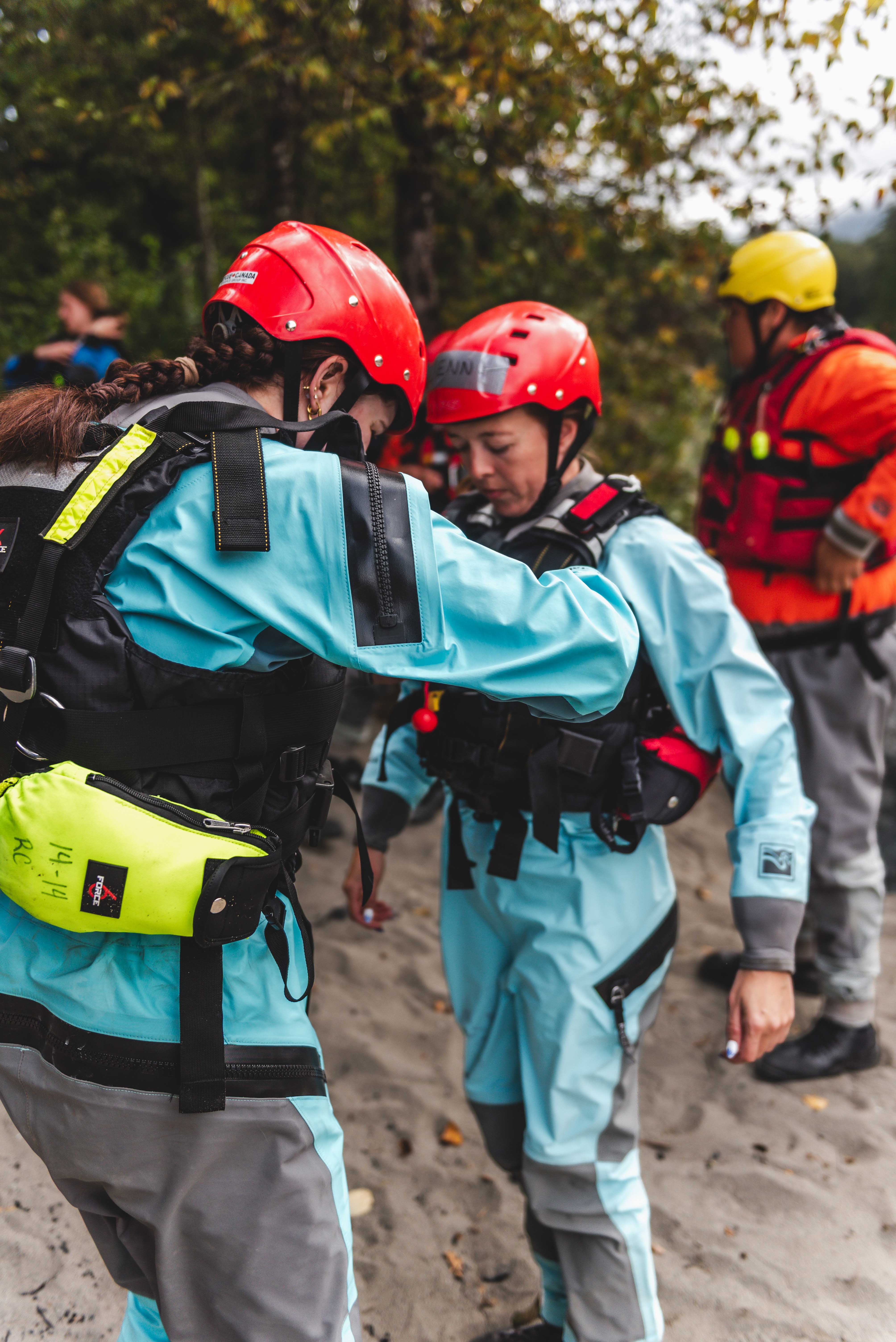
A public course is Rescue Canada's open enrollment format. Individuals or small groups register for a scheduled session, delivered at a set location on a set date, alongside other students who may be coming from entirely different organizations, backgrounds, and reasons for training.
Public courses work well for a specific kind of situation: you've got one person, or a handful of people, who need certification, and you don't need the training built specifically around one company's operation. Maybe you're a resource management professional whose employer needs you certified but doesn't have enough staff to fill a private session. Maybe you're an individual pursuing a rope rescue certification independently. Public courses give you access to the same Rescue Canada instruction, the same rigorous standards, and the same recognized certification, without needing to coordinate an entire group.
Registration for public courses happens through our office or directly through our website, and course locations run on a simple threshold: once enough students have registered for a location near you, the course gets scheduled and confirmed.
Private Courses: Built Around Your Organization
A private course is a different animal entirely. Instead of joining a scheduled public session, your organization works directly with Rescue Canada to build a course around your team, your timeline, and often your own worksite or operational environment.
Private courses run through a signed Training Agreement between your organization and Rescue Canada. That agreement lays out the scope of training, the schedule, and the terms specific to your group. Once it's in place, we handle registration and course delivery directly with your organization rather than through open enrollment.
This format tends to make the most sense for companies, agencies, or crews that need to certify multiple people at once, want training built specifically around their operational realities, or need scheduling flexibility that a public course calendar doesn't offer. If your crew works in a specific environment with specific hazards, whether that's a resource extraction site, a guiding operation, or an emergency response unit, a private course lets us shape the content, pacing, and scenarios around exactly what your team faces on the job.
Same Certification, Different Path
Here's the part that matters most: the certification you walk away with is identical in rigor whether you took a public or private course. Both are built to meet or exceed the same industry standards. Both are delivered by the same Master Rescue Instructors. The difference is entirely about logistics and format, not about the quality or credibility of the training itself.
That said, there are practical tradeoffs worth thinking through. Public courses are typically faster to get into if you don't need a large group trained at once, since you're joining an already-scheduled session rather than coordinating a custom date. Private courses take more lead time to organize, since they involve a Training Agreement and coordination around your group's specific needs, but they pay off in flexibility: you control the timeline, the location can often be your own site, and the training can be shaped around your actual operating conditions rather than generic scenarios.
Choosing Between the Two
A few questions tend to clarify which format makes sense. How many people need training? A single person or two is usually simplest through a public course. A full crew or team almost always makes more sense as a private course, both for efficiency and for the benefit of training together as a unit that will actually work together in the field.
Does your organization have specific operational realities that generic training won't fully address? If your team works a particular stretch of river, a specific type of terrain, or a distinct set of equipment and protocols, a private course lets us build the content around that directly.
Does your timeline need to work around your own operations rather than a public course calendar? Private courses give you that control; public courses ask you to work around an existing schedule.
Getting Started
Whichever path fits, the process starts the same way: a conversation with our office about your group, your timeline, and what you're trying to accomplish. We'll walk you through exactly what registration looks like, what to expect from the Training Agreement process if you're going private, and how to get your team or yourself into a course that actually delivers the outcome you need, not just a certificate at the end of it.
Rescue Canada has run both public and private training for over four decades, for everyone from individual adventure guides to full RCMP and fire rescue teams. Whatever your situation, there's a format that fits, and it's worth a short conversation to figure out which one gets you there most efficiently.